
 Back
Back

Block a datacenter IP and you've cost the operator a fraction of a cent. Block a mobile IP and you might have just kicked a few thousand real customers off your site by accident. That asymmetry is the entire reason mobile proxies exist as a category. It's also why a single 4G/LTE exit can quietly do work that a whole fleet of datacenter IPs can't touch.
Let me be specific about why, because "mobile IPs are more trusted" gets repeated constantly and almost nobody explains the mechanism.
CGNAT is the trick, and it isn't really a trick
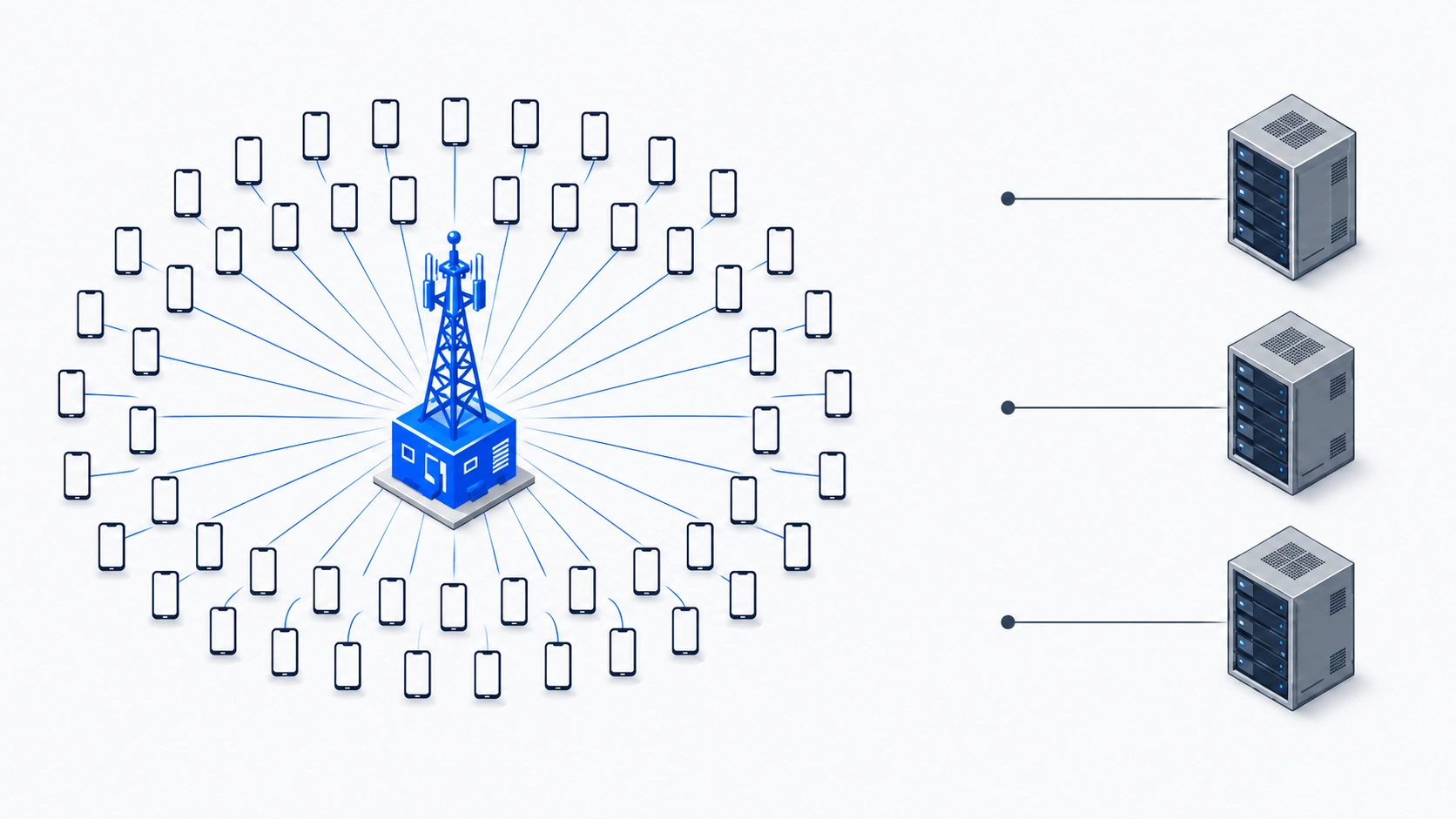
Carriers ran out of IPv4 space years ago. So they park you behind Carrier-Grade NAT: hundreds or thousands of subscribers hanging off a given tower share a small pool of public IPv4 addresses. Your phone's "public IP" right now is almost certainly not yours alone. It's a shared front door for a whole slice of a carrier's customer base.
Anti-bot vendors know this cold. Cloudflare, DataDome, HUMAN (the outfit that swallowed PerimeterX), Akamai — their scoring engines read the ASN behind a request and weight it before they look at anything else. A request from AS396982 (Google Cloud) opens with a trust deficit. A request from a T-Mobile or Vodafone mobile ASN opens closer to neutral, because the false-positive cost of blocking that range is brutal. The site literally can't afford to swing hard at it.
That's the honest version of the pitch. Mobile IPs aren't magic. Blocking them is expensive for the defender, so the defender under-blocks by design.
A datacenter IP is guilty until proven innocent. A mobile IP is innocent until it does something genuinely stupid — and even then the site flinches, because behind that address might be a paying customer.
It also rotates on its own
There's a second property people undersell. Mobile IPs churn by themselves. Walk between towers, drop to a weaker signal, let the DHCP lease lapse — the carrier hands you a new public IP, sometimes several times an hour, with zero action on your part. To a fingerprinting system hunting for "one persistent actor," that drift is noise it can't cleanly separate from a person on a train. You get rotation that reads like a human commuting, not a script grinding through a proxy list.
The comparison nobody makes fairly
People stack these three types against each other like one wins outright. It doesn't work that way. Here's how I actually weigh them before a job:
| Dimension | Datacenter | Residential | Mobile (4G/LTE) |
|---|---|---|---|
| Trust / block resistance | Low | High | Highest |
| Raw speed & latency | Excellent (often 1 Gbps+) | Good, variable | Modest (mobile uplink, jitter) |
| Cost model | Cheapest per IP | Per-GB, mid | Priciest per port / GB |
| Pool size | Huge | Tens of millions | Smaller, shared |
| Natural IP rotation | None | Occasional | Frequent, carrier-driven |
| Best for | Bulk, tolerant targets | Most scraping | Hardest targets, mobile UX |
Read that table and the strategy writes itself. You don't buy mobile for everything. You buy it for the 5% of targets residential can't crack, and you run cheap datacenter proxies for the 60% that don't care who you are. Everything in between is residential.
Where one mobile IP earns its keep
Three jobs where I reach for mobile and don't second-guess it:
- Social-media account management. Instagram, TikTok and their cousins are ruthless about datacenter and even residential ranges the moment several accounts share one exit. A sticky mobile session per account, on an IP that looks like a normal phone, is the difference between an account that lives and one that eats a challenge on day two. This is the single most common reason people pay for mobile, full stop.
- Mobile-app and mobile-web QA. Testing what a real subscriber on a carrier network actually sees — geo-gated content, carrier billing flows, app-store variants, mobile-only paywalls — needs a mobile exit to be faithful. A datacenter IP hands you the desktop-flavored, tripwire-tripping version of the page and calls it a day.
- Ad verification on mobile inventory. A large share of programmatic ads only render for real mobile IPs. Check placement, sniff for cloaking or a fraudulent redirect chain from a datacenter IP, and you see the sanitized experience the fraudsters serve to bots. From a 4G exit you see what the user sees.
What it looks like in practice
Sticky sessions are the part people fumble. Usually you pin the session with credentials baked into the username, then hit a rotate endpoint only when you deliberately want a fresh IP. Rough shape:
# Sticky session: same mobile IP held for the life of the session token
curl -x "http://user-session-a17f:[email protected]:9000" https://api.ipify.org
# -> 100.64.x.x style carrier IP (that 100.64/10 range is the CGNAT giveaway)

# Force a fresh exit only when you actually want to rotate
curl "http://user:[email protected]:9000/rotate"

# Prove geo + carrier targeting landed where you asked
curl -x "http://user-country-us-carrier-tmobile:[email protected]:9000" \
     https://ipinfo.io/json
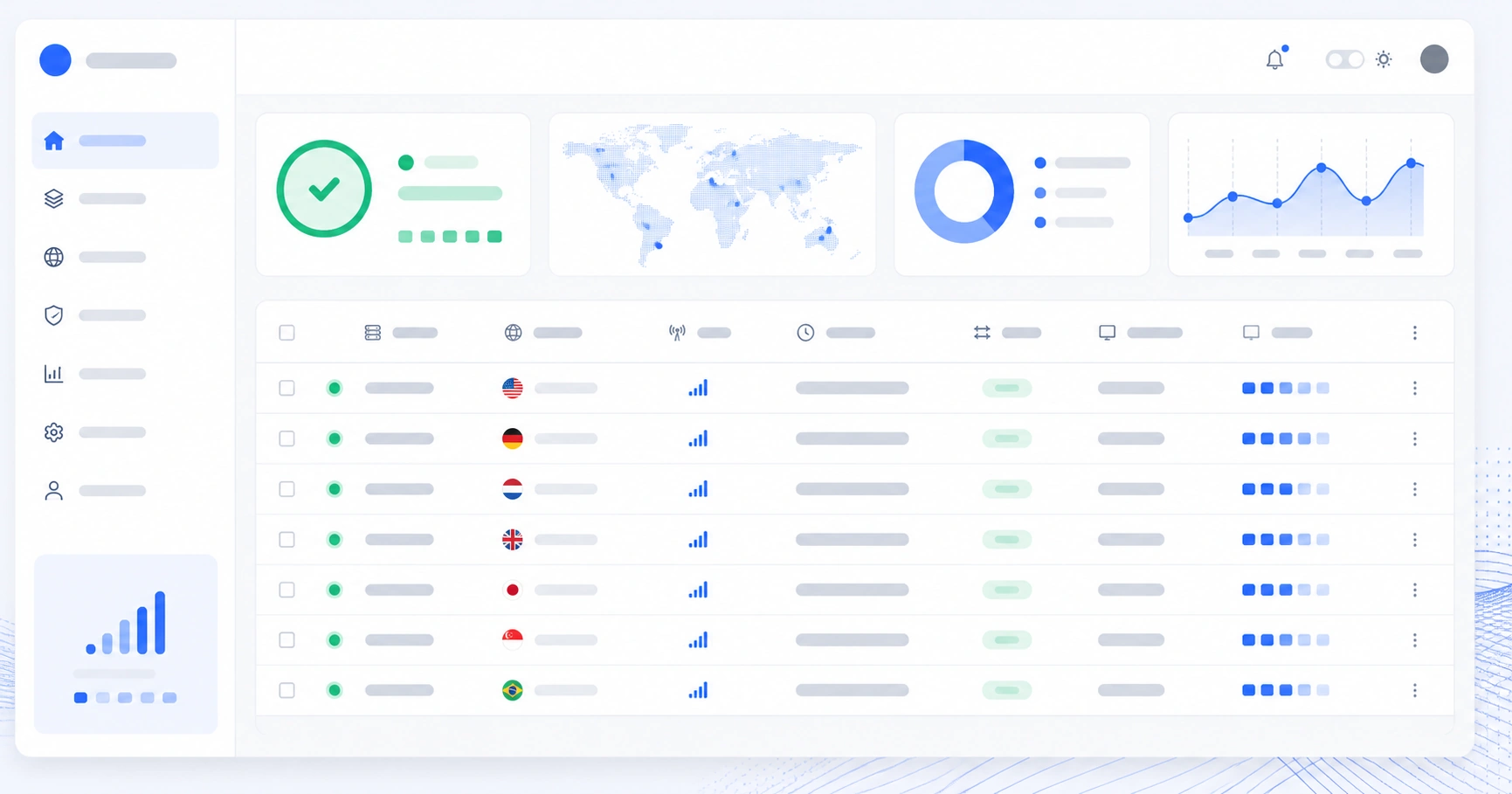
One habit that saves hours: run the exit through the in-dashboard proxy tester before you point production traffic at it. Confirm the ASN reads as a mobile carrier and the geo matches. I've watched a team burn an afternoon debugging "blocks" that turned out to be a mislabeled exit sending traffic from the wrong country.
The honest downsides
I'd be selling you something if I stopped there. Mobile is the wrong call more often than the marketing admits.
- Price. This is the big one. Mobile runs roughly $2–8/GB, or a flat monthly port fee that can climb into three figures for a dedicated 4G modem. Residential per-GB is a fraction of that. Pull terabytes off a tolerant target on mobile pricing and your invoice will make your eyes water.
- Speed and jitter. You're on a mobile uplink shared with real subscribers. Latency wobbles, throughput sags when the tower is busy, and you'll hit the occasional dead stall. For latency-sensitive or high-throughput work, that variance is a real tax.
- Bandwidth is precious. Because you're paying premium rates, wasting a gigabyte on images and third-party trackers you never parse actually hurts. Block assets, cache hard, request only what you need.
- Shared-IP baggage. The same CGNAT sharing that helps you can hand you an IP pre-warmed with someone else's bad behavior. Decent providers cycle and monitor their pools, but nobody gives you a pristine, never-touched mobile IP. That's not a thing.
My rule of thumb is boring: if a cheaper proxy type is getting through, use it. Reach for mobile when residential is failing, when the target is explicitly a mobile surface, or when one long-lived trusted identity matters more than raw volume. Don't pay 4G rates to scrape a site that would've waved a datacenter IP straight in.
So — one IP or a thousand?
The headline isn't hyperbole, but it's conditional. Against a soft target, a thousand datacenter IPs win on cost and speed, and it isn't close. Against DataDome guarding a login flow, or an app-only checkout, those thousand IPs get scored, throttled and bounced — while one patient 4G exit strolls through, because the site can't risk collateral damage on its own subscribers.
Match the proxy to the target's defenses, not to a spec-sheet leaderboard. If you want the mobile side of that decision spelled out, our 4G/LTE mobile proxies cover carrier and city targeting, and mobile pricing lays out the per-GB and per-port options — pay-as-you-go, crypto accepted, no minimum to grab one and find out whether your hardest target finally opens up.